Wedding Reception Timeline: Order of Events & Schedule

By Morgan Reid · Etiquette Editor, Evermore
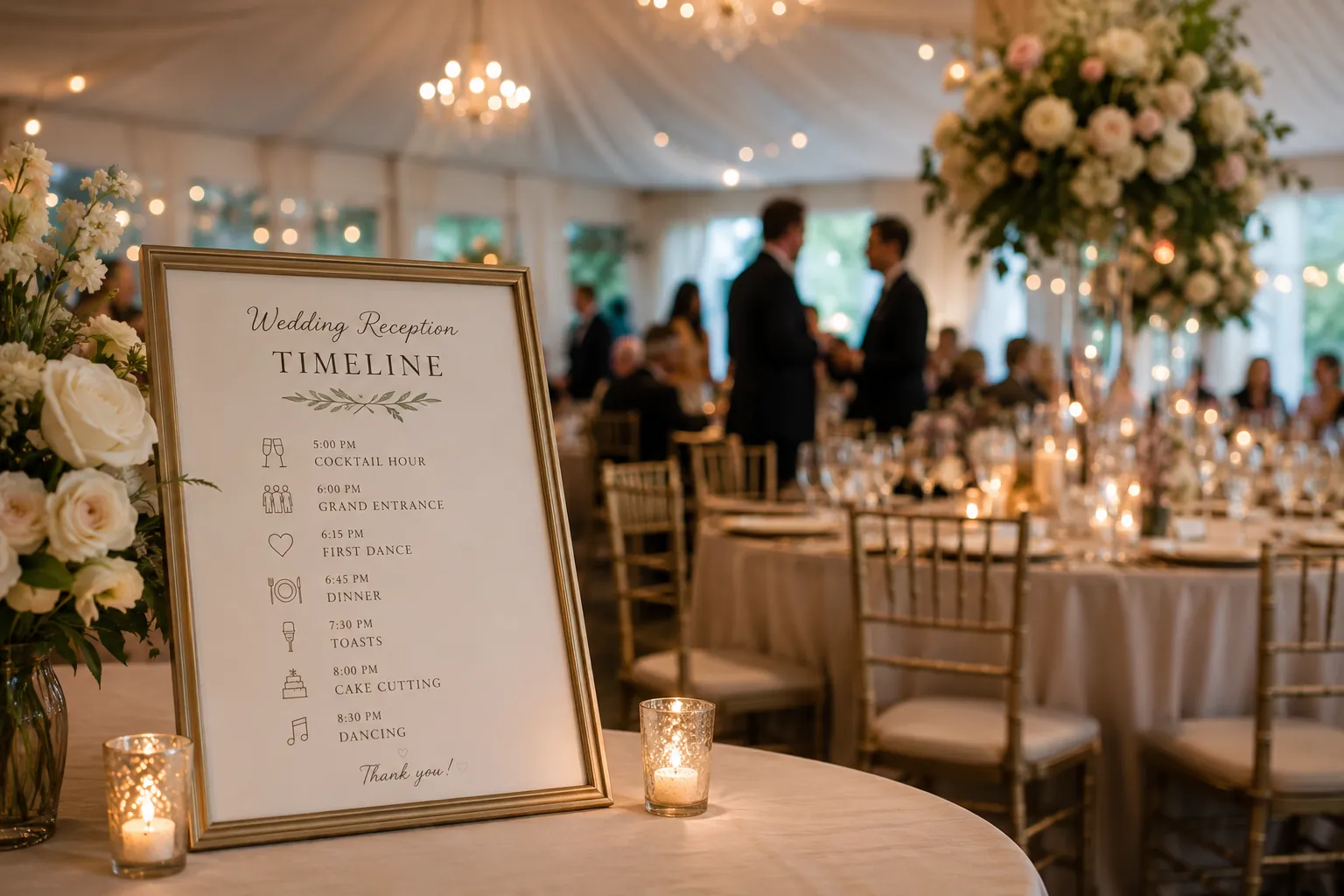
A wedding reception has a rhythm, even when nobody calls it that.
Guests arrive with drinks in hand. The couple enters. Someone clinks a glass. Dinner appears. A microphone gets passed to a parent, a best man, a maid of honor, or the friend who swore they would keep it short. The first dance either happens early and elegantly or waits until everyone has had enough wine to become extremely supportive. Cake is cut, photos happen, the dance floor opens, and suddenly the night is moving faster than anyone expected.
That is why the timeline matters.
A good wedding reception timeline does more than keep the caterer, DJ, photographer, and planner aligned. It shapes the feeling of the evening. It decides when guests are asked to pay attention, when they can relax, when food arrives, when speeches happen, when dancing begins, and whether the night feels smooth or slightly stop-start.
Most receptions have the same basic ingredients, but the order can change. Some couples want a formal entrance, first dance, seated dinner, speeches, cake cutting, and dancing. Others want cocktail-style food, short toasts, a packed dance floor, and very little formality. Both can work. The key is choosing an order that fits the kind of reception you are actually having.
Here is the practical version: the best reception timeline is clear enough for vendors, relaxed enough for guests, and realistic enough that nobody is trying to cut the cake while the entrée is still being cleared.
Need Help With Wedding Speeches?
Get a personalized speech draft based on the role, stories, and tone — ready before the reception timeline gets real.
Try for free
The standard wedding reception order of events
A traditional wedding reception order usually looks something like this:
- Cocktail hour
- Guests move into the reception space
- Wedding party entrance
- Couple's grand entrance
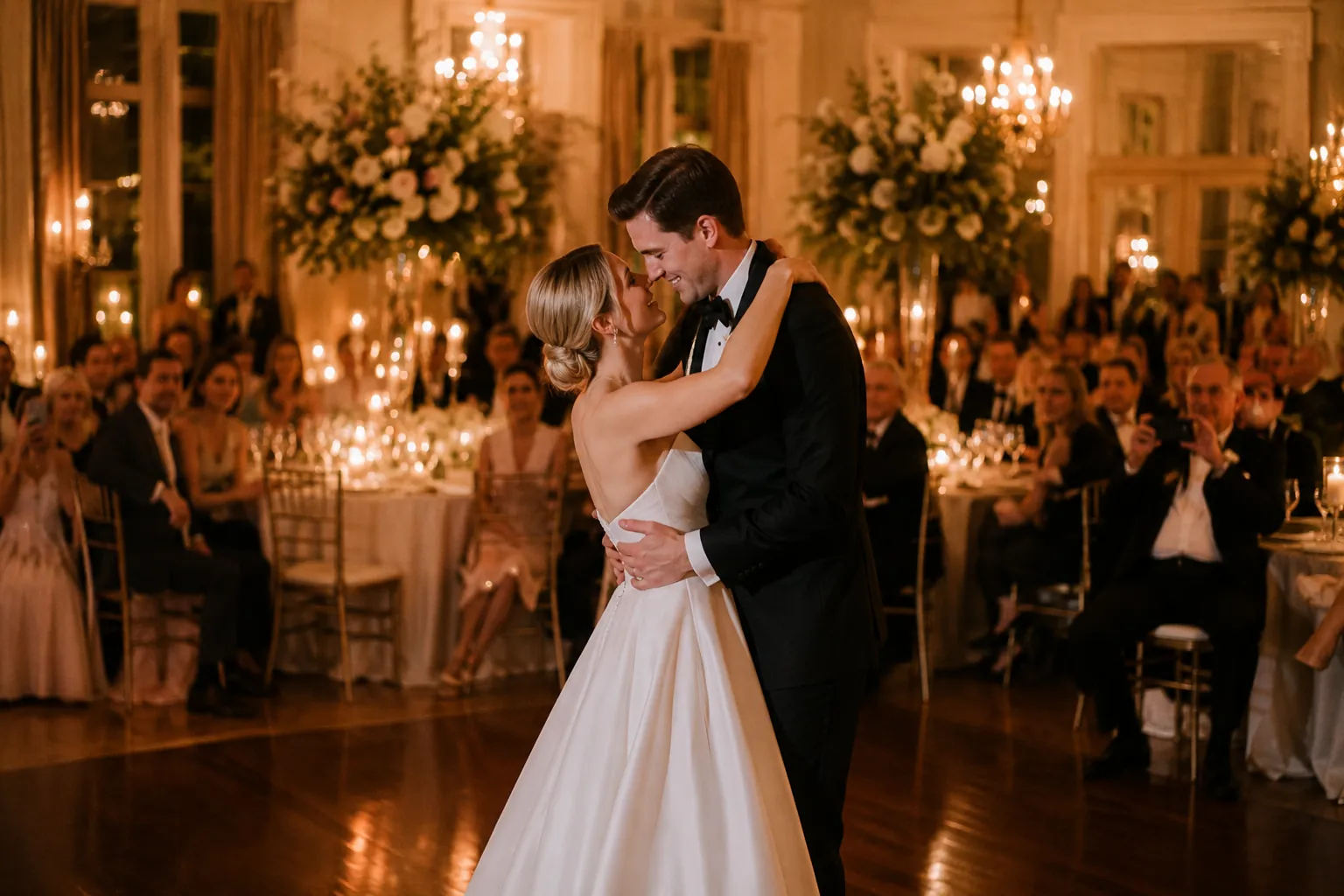
- First dance
- Welcome toast or blessing
- Dinner service
- Speeches and toasts
- Parent dances
- Cake cutting
- Open dancing
- Bouquet toss, garter toss, or other optional moments
- Late-night snack
- Last call
- Final dance or grand exit
That order is common, but it is not fixed. The first dance can happen right after the entrance or later after dinner. Speeches can happen before dinner, between courses, or after the main meal. Cake cutting can happen early if the photographer leaves soon, or later if the couple wants it to mark the shift into the party. Parent dances can happen immediately after the first dance or after speeches.
The goal is not to obey tradition perfectly. The goal is to avoid making the reception feel awkwardly interrupted.
Sample 5-hour wedding reception timeline
This is a strong default for many weddings. It assumes a separate cocktail hour followed by a five-hour reception.
| Time | Event |
|---|---|
| 5:00 p.m. | Cocktail hour begins |
| 6:00 p.m. | Guests enter reception space |
| 6:10 p.m. | Wedding party entrance |
| 6:15 p.m. | Couple's grand entrance |
| 6:20 p.m. | First dance |
| 6:25 p.m. | Welcome toast or blessing |
| 6:35 p.m. | Dinner service begins |
| 7:15 p.m. | Speeches begin |
| 7:45 p.m. | Dinner service continues / clears |
| 8:00 p.m. | Parent dances |
| 8:10 p.m. | Dance floor opens |
| 8:45 p.m. | Cake cutting |
| 9:00 p.m. | Dancing continues |
| 10:00 p.m. | Late-night snack |
| 10:30 p.m. | Last call or final formal moment |
| 10:50 p.m. | Final dance |
| 11:00 p.m. | Reception ends |
This timeline works because it gets the formal moments handled before the room loses focus, but it still leaves a generous dance block. It also avoids stacking every speech and dance before guests have eaten.
Sample 4-hour wedding reception timeline
A four-hour reception needs tighter pacing. You can still include the major moments, but you have less room for long speeches, extended dinner service, and multiple interruptions.
| Time | Event |
|---|---|
| 6:00 p.m. | Guests enter reception |
| 6:10 p.m. | Couple entrance |
| 6:15 p.m. | First dance |
| 6:20 p.m. | Welcome toast |
| 6:30 p.m. | Dinner begins |
| 7:05 p.m. | Speeches during or after first course |
| 7:35 p.m. | Parent dances |
| 7:45 p.m. | Cake cutting |
| 8:00 p.m. | Open dancing |
| 9:15 p.m. | Late-night snack or final bar notice |
| 9:45 p.m. | Final dance |
| 10:00 p.m. | Reception ends |
For a four-hour reception, the biggest planning choice is how many formalities you really want. If you include long entrances, multiple speeches, parent dances, cake cutting, bouquet toss, garter toss, anniversary dance, and a formal exit, the dance floor may never get a proper stretch of time.
Four-hour receptions usually work best when speeches are short and optional traditions are chosen carefully.
Sample cocktail-style reception timeline
A cocktail-style reception has a different flow. There may be stations, passed appetizers, no assigned seating, and less of a strict dinner service.
| Time | Event |
|---|---|
| 5:30 p.m. | Guests arrive / cocktails and food stations open |
| 6:00 p.m. | Couple enters |
| 6:05 p.m. | Short welcome toast |
| 6:15 p.m. | First dance |
| 6:20 p.m. | Food stations continue |
| 6:45 p.m. | Short speeches |
| 7:15 p.m. | Dancing begins |
| 8:00 p.m. | Dessert or cake cutting |
| 8:15 p.m. | Dancing continues |
| 9:30 p.m. | Late-night snack |
| 10:15 p.m. | Final formal moment |
| 10:30 p.m. | Reception ends |
Cocktail receptions usually feel better when speeches are brief and placed early enough that guests are not balancing plates while trying to listen. If the food service is ongoing, ask the caterer and DJ how they usually manage attention during toasts.
Sample dinner-first reception timeline
Some couples prefer guests to eat before speeches and dances. This can work beautifully, especially if the ceremony was long, the cocktail hour was light, or the couple wants a more relaxed reception start.
| Time | Event |
|---|---|
| 6:00 p.m. | Guests seated |
| 6:10 p.m. | Couple entrance |
| 6:15 p.m. | Welcome toast |
| 6:20 p.m. | Dinner begins |
| 7:15 p.m. | Speeches after main course |
| 7:45 p.m. | First dance |
| 7:50 p.m. | Parent dances |
| 8:00 p.m. | Dance floor opens |
| 8:45 p.m. | Cake cutting |
| 9:00 p.m. | Dancing continues |
| 10:00 p.m. | Late-night snack |
| 10:45 p.m. | Final dance or send-off |
| 11:00 p.m. | Reception ends |
This is a good option if guest comfort is the priority. People listen better after they have eaten. The tradeoff is that the dance floor opens later, so speeches need to stay tight.
Cocktail hour
Cocktail hour is usually the bridge between the ceremony and the reception.
It gives guests something to do while the couple, wedding party, and family finish portraits. It also gives the venue time to flip the ceremony space if needed. A typical cocktail hour lasts around 60 minutes, though it can run shorter if photos were mostly done before the ceremony.
Good cocktail hour timing usually includes:
- drinks available quickly
- enough food to keep guests comfortable
- clear signage or staff direction
- music that sets the tone without feeling like the party has fully begun
- a plan for moving guests into the reception space
The biggest mistake is letting cocktail hour drift without communication. If guests are standing around wondering what happens next, the reception already feels less organized before dinner begins.
Guests enter the reception space
Moving guests from cocktail hour to the reception space takes longer than people expect.
Even if the room is nearby, guests need time to:
- finish drinks
- find escort cards or a seating chart
- locate their table
- greet people
- settle in
- put down bags or jackets
Build in at least 10 to 15 minutes for this transition. If your guest count is large, the venue has multiple rooms, or seating is complicated, allow more.
This is also a good time for the DJ or MC to start gently guiding the evening. Guests respond better when they know what is happening.
Wedding party and couple entrance
The entrance sets the energy for the reception.
Some couples introduce the full wedding party. Others introduce only themselves. Some want a high-energy entrance with music and cheering. Others prefer a quick, elegant arrival with minimal spectacle.
Common options:
- parents enter first
- wedding party enters in pairs
- couple enters last
- only the couple is formally introduced
- no formal entrance at all
If you are trying to save time or avoid a very performative start, skip wedding-party introductions and introduce only the couple. It is cleaner, faster, and often more elegant.
First dance
The first dance can happen right after the couple's entrance or later after dinner.
First dance early
This works well if:
- you want a smooth transition from entrance to romance
- you want photos while everyone is focused
- you want to get the emotional formalities started
- you do not want to interrupt dancing later
First dance after dinner
This works well if:
- you want dinner to feel relaxed
- you want the dance to open the party
- you do not want guests watching too many formal moments before eating
There is no single correct placement. The early first dance feels polished and efficient. The later first dance can feel more like a natural launch into dancing.
Welcome toast or blessing
A welcome toast usually happens before dinner. It may be given by:
- a parent
- the couple
- the host
- a family member
- the officiant, in some cases
This should be short. Think one to three minutes, not a full speech. Its job is to welcome guests, acknowledge the occasion, and move the evening into dinner.
If there is a blessing, it usually happens immediately before the meal.
Dinner service
Dinner timing depends on the style of service.
A plated dinner is usually more structured. A buffet can take longer if not managed well. Food stations may be more flexible but can make formal speeches harder if guests are moving around.
Ask your caterer:
- how long service usually takes for your guest count
- whether speeches can happen during courses
- when tables will be cleared
- when dessert or cake should happen
- whether late-night food affects the kitchen timeline
Dinner is where reception schedules often slip. Build in some buffer. A timeline that assumes perfect food service rarely survives contact with 140 hungry guests and one table that cannot decide between entrées.
Wedding speeches and toasts
Speeches are one of the most important timeline decisions because they require the whole room's attention.
Common placements include:
Before dinner
This gets speeches done early, but hungry guests may become less generous listeners.
During dinner
This can work if speeches happen between courses and the catering team is aligned.
After dinner
This is often comfortable for guests, though it can delay dancing.
Split throughout dinner
A welcome toast before dinner, then main speeches after the first course or main course, can keep the evening from becoming one long speech block.
For a deeper breakdown of who usually speaks and in what order, use the order of speeches at wedding guide. For reception timeline purposes, the practical rule is simple: keep speeches grouped enough that the evening feels organized, and short enough that people still want to dance afterward. If you are also one of the speakers, it helps to draft your speech before the rehearsal so you are not editing on the day.
Plan the Timeline, Then Write the Speech
Once you know when speeches happen, Evermore can help create a draft that fits the moment.
Try for free
How long should speeches take?
A good speech block usually lasts 10 to 25 minutes total.
That depends on how many people are speaking. A common breakdown might be:
| Speaker | Ideal length |
|---|---|
| Welcome toast | 1–3 minutes |
| Parent speech | 3–5 minutes |
| Best man speech | 4–6 minutes |
| Maid of honor speech | 4–6 minutes |
| Couple thank-you | 2–4 minutes |
If you have five or six speakers, you need tighter limits. Long speeches can flatten the reception energy fast, especially if they happen after dinner and before dancing.
Make sure each speaker knows:
- when they are speaking
- how long they have
- whether they need to stand at a mic
- who introduces them
- whether they should toast at the end
If someone only needs a brief toast rather than a full speech, the wedding toast examples page can help them keep it short and usable. If they want to see how finished speeches actually sound at this length, the wedding speech examples page collects real ones across roles.
Parent dances
Parent dances usually happen after the first dance or after dinner.
Common options:
- first dance, then parent dances immediately
- first dance early, parent dances after dinner
- parent dances right before opening the dance floor
- combined parent dances to save time
- no parent dances
If you want to keep the reception moving, combine parent dances or keep them short. You can ask the DJ to fade out after 90 seconds instead of playing every song in full.
That small choice can save several minutes without making the moment feel rushed.
Cake cutting
Cake cutting can happen earlier than many couples expect.
If the photographer or videographer leaves before the end of the reception, cut the cake before they go. Many couples place cake cutting:
- after speeches
- before open dancing
- during dancing as a quick pause
- after parent dances
- before dessert service
Cake cutting does not need to be a major production unless you want it to be. A quick announcement, a few photos, a bite, and then service can continue.
If you are serving plated dessert instead of cake, you may still do a small cake-cutting moment for photos.
Open dancing
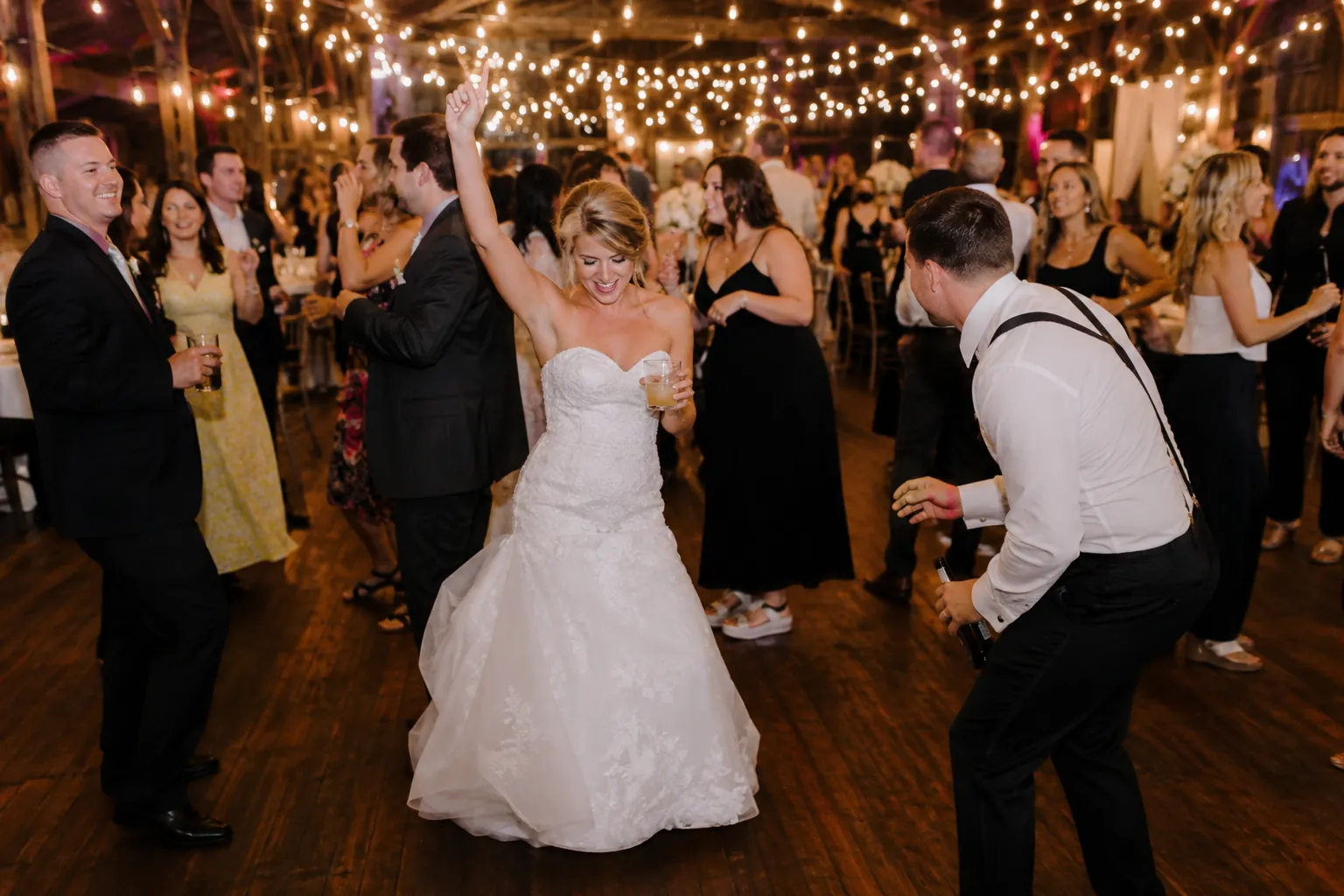
Once open dancing begins, think carefully before interrupting it.
The dance floor needs momentum. If you open it, stop for cake, restart it, stop for bouquet toss, restart it, stop for a late speech, and then restart it again, guests may never fully settle into party mode.
The best approach is usually:
- finish major formalities first
- open the dance floor
- interrupt only once if needed
- keep later announcements short
Your DJ or bandleader can help you decide what works. Good entertainment teams understand crowd energy better than almost anyone else in the room.
Bouquet toss, garter toss, anniversary dance, and other optional moments
These traditions are optional.
Some couples love them. Others skip them completely. Some replace the bouquet toss with an anniversary dance, private bouquet dedication, group photo, or nothing at all.
If you include optional reception moments, place them where they will not break the evening:
- after cake cutting
- during an already planned dance-floor pause
- before late-night snacks
- around the midpoint of dancing
Avoid loading the reception with traditions you do not actually care about. Every added moment costs time and attention.
Late-night snack
Late-night snacks usually arrive 60 to 90 minutes before the reception ends.
They work especially well when:
- dinner was early
- the bar is open late
- guests are dancing
- the reception runs five or more hours
- there is an after-party
Keep the announcement simple. Food can often appear without stopping the whole reception.
Last call and final dance
Ask your venue when bar service ends and how much time is needed for guests to exit.
A clean ending usually includes:
- last call announcement
- final song or private last dance
- shuttle or transportation reminders
- grand exit, if planned
If you are doing a sparkler exit or formal send-off, build in more time than you think. Gathering guests, distributing items, lining everyone up, and coordinating the photographer takes coordination.
A private last dance can be easier and more intimate. Guests are moved out or toward the exit while the couple has one final song alone in the room.
How to build your own wedding reception timeline
Start with the fixed points.
These usually include:
- ceremony end time
- cocktail hour start and end
- venue access and end time
- dinner service timing
- photographer and videographer end times
- band or DJ schedule
- transportation schedule
- noise restrictions
- kitchen timing
- sunset photos, if relevant
Then add the major formalities:
- entrances
- first dance
- welcome toast
- speeches
- parent dances
- cake cutting
- open dancing
- final moment
Then check the flow. Ask:
- Are guests waiting too long before eating?
- Are speeches happening when people can actually listen?
- Are formalities spread out too much?
- Does the dance floor get a proper uninterrupted block?
- Are photos happening before the photographer leaves?
- Is there enough buffer between dinner and dancing?
- Does the reception feel like us?
The timeline should serve the party, not the other way around.
If the ceremony order is still a question mark too, the wedding ceremony script guide is the cleanest reference for what happens before guests ever get to the reception.
Reception timeline mistakes to avoid
Scheduling every formality before dinner
Guests can be patient, but patience has limits. If people sit through entrances, dances, speeches, blessings, and multiple announcements before food, the room may get restless.
Letting speeches run too long
This is one of the easiest ways to lose reception energy. Give speakers time limits and make them clear.
Cutting the cake too late for photos
If you care about cake-cutting photos, schedule it before key photo/video coverage ends.
Interrupting the dance floor too many times
Once dancing is working, protect it.
Forgetting transition time
Moving guests, seating people, clearing plates, finding speakers, setting up microphones, and cueing music all take time.
Treating the timeline like a fantasy version of the night
Build a timeline for real people. Real guests move slowly, speeches run long, dresses need bustling, parents get pulled into conversations, and someone important is always in the bathroom when the announcement starts.
Best timeline if speeches are a priority
If speeches matter a lot, do not bury them late in the night.
A strong speech-friendly flow:
| Time | Event |
|---|---|
| 6:00 p.m. | Guests seated |
| 6:10 p.m. | Couple entrance |
| 6:15 p.m. | First dance |
| 6:20 p.m. | Welcome toast |
| 6:30 p.m. | Dinner begins |
| 7:10 p.m. | Speeches between courses |
| 7:40 p.m. | Dinner resumes / clears |
| 8:00 p.m. | Parent dances |
| 8:10 p.m. | Dance floor opens |
| 8:45 p.m. | Cake cutting |
This gives speeches attention while guests are comfortable, and it still leaves the back half of the reception for dancing.
Best timeline if dancing is the priority
If the party matters most, front-load the formalities and protect the dance floor.
| Time | Event |
|---|---|
| 6:00 p.m. | Guests seated |
| 6:10 p.m. | Couple entrance |
| 6:15 p.m. | First dance |
| 6:20 p.m. | Welcome toast |
| 6:30 p.m. | Dinner |
| 7:15 p.m. | Short speeches |
| 7:35 p.m. | Parent dances |
| 7:45 p.m. | Cake cutting |
| 8:00 p.m. | Open dancing |
| 10:00 p.m. | Late-night snack |
| 10:50 p.m. | Final song |
The key is getting formalities done before dancing starts. Once the floor is open, let it breathe.
Best timeline for a relaxed dinner-focused reception
If you want the reception to feel more like a beautiful dinner party, slow the pace slightly.
| Time | Event |
|---|---|
| 5:30 p.m. | Cocktail hour |
| 6:30 p.m. | Guests seated |
| 6:40 p.m. | Couple entrance |
| 6:45 p.m. | Welcome toast |
| 6:50 p.m. | Dinner begins |
| 7:30 p.m. | Speeches between courses |
| 8:15 p.m. | Cake cutting / dessert |
| 8:30 p.m. | First dance |
| 8:35 p.m. | Parent dances |
| 8:45 p.m. | Dancing or relaxed music |
| 10:30 p.m. | Reception ends |
This works well for restaurant weddings, intimate receptions, and couples who care more about conversation than a huge dance floor.
Frequently asked questions about wedding reception timelines
What is the normal order of events at a wedding reception?
A common order is cocktail hour, guest seating, wedding party entrance, couple entrance, first dance, welcome toast, dinner, speeches, parent dances, cake cutting, open dancing, late-night snack, and final dance or exit.
How long should a wedding reception last?
Many receptions last four to six hours, often with a cocktail hour before the main reception. The right length depends on the venue contract, dinner style, guest count, and how much dancing or entertainment you want.
Do speeches happen before or after dinner?
Speeches can happen before dinner, during dinner, or after dinner. Many couples place them between courses or after the main course so guests are seated, comfortable, and ready to listen.
When should the first dance happen?
The first dance often happens right after the couple's entrance or after dinner before the dance floor opens. Early works well for photos and flow; later works well if you want it to launch the party.
When should cake cutting happen?
Cake cutting often happens after dinner, after speeches, or before open dancing. If your photographer leaves early, schedule cake cutting before coverage ends.
How much buffer should we build into the reception timeline?
Build in at least 5 to 10 minutes around major transitions and more for guest seating, dinner service, large wedding parties, and formal exits. Reception timelines almost always need a little breathing room.
Do we need every traditional reception event?
No. Choose the events that matter to you. You can skip bouquet toss, garter toss, formal entrances, parent dances, or cake cutting if they do not fit the reception you want.
Final thoughts
A wedding reception timeline should help the night feel easy.
That does not mean every minute needs to be controlled. The best timelines leave room for guests to talk, eat, laugh, dance, and enjoy the evening without wondering what is happening next. They give vendors enough structure to do their jobs and give guests enough flow to stay comfortable.
Start with the fixed points. Choose the formalities that matter. Keep speeches tight. Protect the dance floor once it opens. Build in more transition time than feels necessary.
A reception is not improved by squeezing in every tradition.
It is improved by choosing the right moments, placing them well, and letting the rest of the night breathe.
Create a Wedding Speech Before the Reception
Start with a personalized draft, then edit until it sounds natural.
Try for free
Related Articles
Wedding Planning · May 19, 2026
Every Wedding Sign You Actually Need (And a Few You Didn't Know About)
A complete wedding signage checklist from Paper & Ink Studio — every sign worth ordering, when to order, and the details that make a venue feel considered.
Speech Examples · April 19, 2026
Wedding Speech Examples for Every Role
Wedding speech examples for every role — best man, maid of honor, parents, and couples — with short samples, what makes each one work, and how to make yours sound like you.
Speech Examples · May 2, 2026
10 Funny Wedding Speeches That Actually Work
Ten funny wedding speeches that actually work — embedded clips with sharp, tasteful commentary on why each one lands.
Speech Examples · May 2, 2026
Wedding Speech Template: Fill-in-the-Blank
A universal wedding speech template with fill-in-the-blank structure, opening lines, tribute lines, toasts, and role-specific guidance.

Speech Examples · May 2, 2026
How to Write a Wedding Speech: Clear Process
A clear, practical process for writing a wedding speech from scratch — structure, tone, story selection, editing, and wording help that sounds like you.
Speech Examples · May 2, 2026
How to Prepare a Wedding Speech
Preparation is the quiet stage that makes wedding speeches actually work. Here's how to gather the right material, choose your angle, and walk into the draft with a point — not a panic.