How to Write a Bridesmaid Speech

By Claire Bennett · Senior Wedding Editor, Evermore
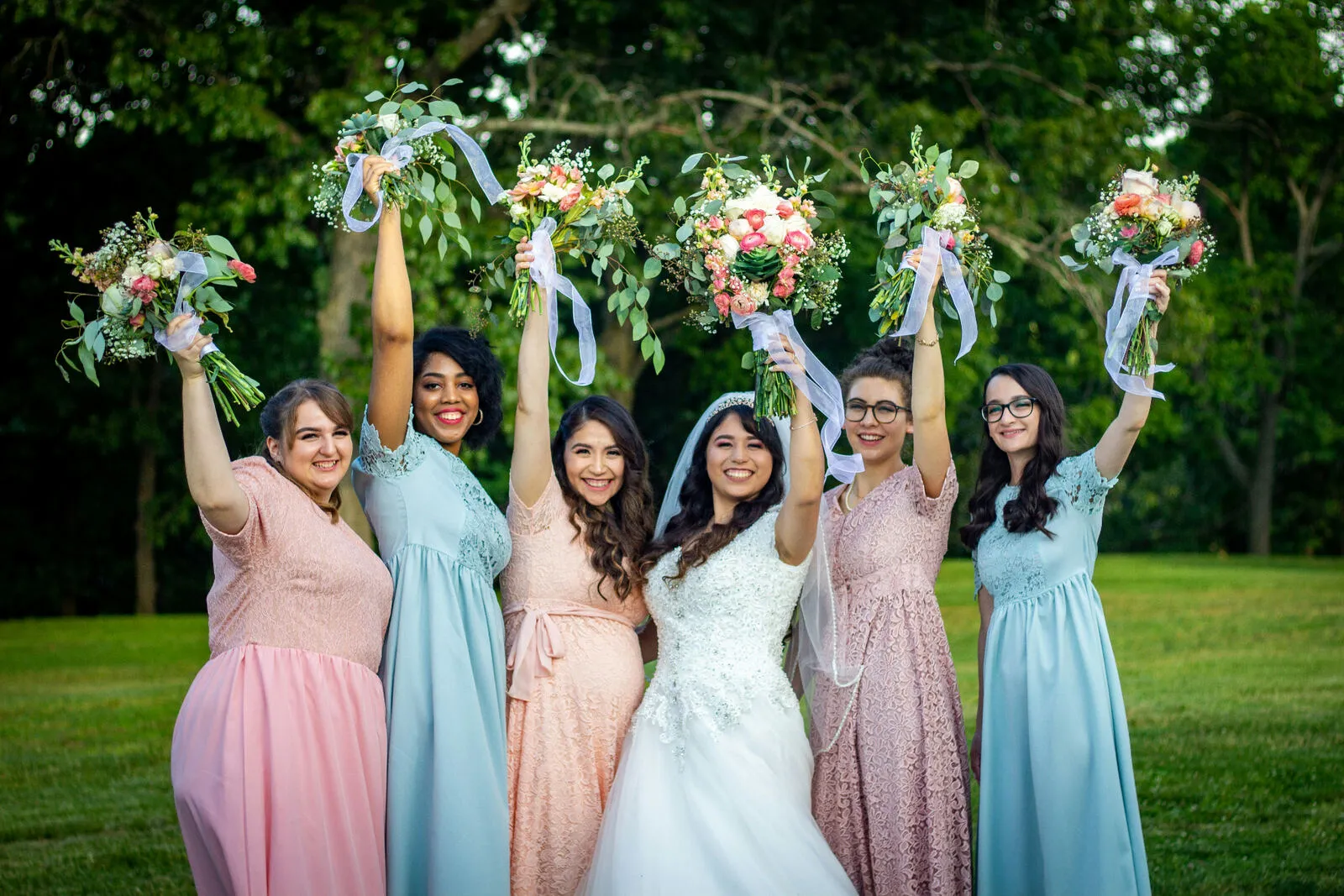
Some wedding-speech roles come with a little cultural furniture already built in.
People think they know what a best man speech is supposed to sound like. They think they know the shape of a father speech. They have at least a rough sketch in their heads of what the groom does with a microphone.
The bridesmaid speech is murkier.
That is part of why people struggle with it. The role has enough freedom to feel pleasant in theory and mildly unhelpful in practice. You are close enough to the bride that people expect warmth, but not always so central to the ceremony that a formal script presents itself. You are allowed to be funny, but not reckless. Personal, but not so private that the rest of the room starts feeling politely locked out. Tender, but not as if you've wandered into someone else's maid of honor draft and started reading from the middle.
That balance is the whole job.
And it is also why bridesmaid speeches go wrong in such specific ways. They often become one of three things:
- a smaller, blurrier maid of honor speech
- a friendship montage with no real shape
- or a stream of cute lines that sound supportive but never quite become a speech
The fix is not to become more formal. It is to get clearer about what this role is actually for.
A good bridesmaid speech should feel like one thoughtful piece of perspective from someone who matters to the bride and belongs in the room. It does not need to carry the emotional architecture of the whole evening. It does not need to turn into a comic set. It does not need to prove the depth of the friendship through sheer volume of stories. It just needs to feel specific, warm, lightly social, and well judged.
That is what this page is for.
Not to drown you in examples. That is what the bridesmaid speech examples page is for. Not to hand you a fill-in-the-blank speech skeleton and call it a day. That belongs on a true template page. And not to give you generic wedding-speech advice so broad it could apply equally well to a groom, a parent, or the cousin who should not really be speaking but apparently is.
This page is about process. How to think your way into a good bridesmaid speech. How to decide what material belongs. How to keep the tone right. How to sound close without sounding childish, warm without sounding mass-produced, and funny without making the speech feel like an overexcited group-chat readout with centerpieces nearby.
Start Your Bridesmaid Speech
Answer a few questions and get a personalized bridesmaid speech in minutes.
Try for free
First, understand what the bridesmaid role actually is
This helps more than people expect.
A bridesmaid speech is not just "maid of honor, but less important." That framing tends to produce weak speeches because it makes the bridesmaid sound like she is filling in for a role she does not actually have.
The better way to think about it is this:
A bridesmaid speech is usually one clean, distinct contribution from someone who knows the bride well and can add one useful layer to the room's understanding of her.
That means the speech often works best when it does three things:
- says something recognisable about the bride
- acknowledges the partner or the couple naturally
- keeps the tone socially aware and appropriately scaled
That last part matters.
The role is scaled differently from maid of honor. Often shorter. Often slightly lighter. Often less expected to carry multiple stories, emotional peaks, and family-level gratitude. A bridesmaid can absolutely be moving. But the speech is usually strongest when it feels chosen rather than comprehensive.
You do not need to cover every chapter. You need one good angle.
Decide what kind of bridesmaid speech you are giving
Before you write, decide the lane.
Not the exact lines. The lane.
A bridesmaid speech might be:
- warm and lightly funny
- affectionate and calm
- more heartfelt than playful
- dry and observant
- short and polished
- casual but still elegant
- emotional in a restrained way
What it should not be is all of these in rotation.
Many speeches feel odd because the writer has not made a tonal decision. The first paragraph tries to sound poised, the second tries to be hilarious, the third becomes unexpectedly intimate, and by the end the speech has become a little identity crisis in heels.
A better prep question is: What do I want the room to feel when I finish?
Pick one or two:
- warmly amused
- touched
- reassured
- more aware of who the bride really is
- more aware of why the couple works
- fond of the speaker, but not because she performed a small festival set
That gives you a useful guardrail.
Start with the bride, not with yourself
This sounds basic, but it is the easiest way to keep the speech from drifting.
A lot of weaker bridesmaid speeches accidentally become about:
- the friendship itself
- the speaker's own personality
- the speaker's memories of being there
- the speaker's emotional experience of the day
Those things can appear. They just should not become the center.
The cleanest way in is to decide: What is the truest thing I can say about the bride?
Not the nicest possible thing. Not the biggest thing. The truest.
Examples of useful centers:
- she makes people feel instantly welcome
- she is loyal in very active, practical ways
- she is funnier than people expect at first
- she notices what matters
- she makes life feel easier around her
- she is steady without being dull
- she has always made other people feel seen
That kind of center gives the speech shape immediately. It also makes story selection much easier, because now you are not trying to include all available history. You are trying to support one real point.
Choose one story that earns its place
Bridesmaid speeches often suffer from over-collected material.
The speaker has:
- school memories
- trip memories
- dating-era memories
- pre-wedding stories
- hen-do material
- an inside joke category
- an "if this were just the two of us, I'd absolutely say that" category
And because all of it feels connected to the friendship, there is a temptation to keep too much.
Resist that.
A useful bridesmaid story is usually:
- short
- socially legible
- revealing
- not humiliating
- not too dependent on private context
- connected to the point you are making about the bride
Ask:
- does this story reveal who she is?
- is it funny because it is human, or just funny because we were there?
- will the room understand why I included it?
- does it make her sound more lovable, not just familiar?
One good story beats three fine ones almost every time.
Keep the bride section observed, not generic
This is where a lot of speeches flatten out.
The bride becomes:
- the most amazing person ever
- beautiful inside and out
- someone who lights up every room
- someone who deserves the world
- your best friend and soulmate, which would be quite a development
The issue is not that these are offensive. It is that they are available to everyone. They do not tell the room much.
Stronger lines tend to come from observation:
- She has a way of making people feel included before they've even realised they needed it.
- She is funny in a way that makes life lighter, not louder.
- One of the things I've always admired most about her is how naturally she shows up for people.
- She remembers what matters to people, and that is rarer than it sounds.
- She makes other people feel more relaxed without making any obvious show of doing it.
That is the level you want.
Not maximal praise. Not poetic praise. Accurate praise.
Create Your Bridesmaid Speech
Get a personalized draft based on your friendship, memories, and tone.
Try for free
Do not make the partner feel stapled on
This is one of the fastest ways to weaken the speech.
A bridesmaid speech can be deeply centered on the bride. Of course it can. But if the partner arrives only as a final sentence that sounds like, "and Josh, you seem lovely too," the whole thing suddenly feels narrower and less generous than it should.
The better question is: What is one honest thing I can say about the relationship from the outside?
Useful observations might be:
- they are easy together
- they make each other calmer
- the bride seems more fully herself with the partner
- there is warmth and steadiness between them
- they bring out something visibly good in each other
- the relationship feels grounded, not just exciting
This often lands better than big romantic declarations about the couple, especially if you are not naturally the sort of person who says "perfect match" without needing a moment alone afterwards.
Know the difference between funny and overfamiliar
Bridesmaid speeches often have access to comic material, which is both a blessing and a trap.
Yes, you can be funny. No, the room does not need every anecdote you and the bride have ever laughed at.
The best humor in this role tends to be:
- light
- affectionate
- socially observant
- a little dry, sometimes
- grounded in the bride's real personality
What tends to go wrong:
- too many inside jokes
- college-story energy that never quite matures
- "I probably shouldn't say this, but…" followed by proof that, no, you really shouldn't
- jokes that make the bride sound chaotic, impossible, or ridiculous in a room where that was not the assignment
Funny lines that work are often modest. A small well-placed tease can do more than a whole comic paragraph that thinks it is earning its own lighting setup.
For example:
- She has always had the rare ability to be both the calmest person in the room and the person texting "on my way" from inside a towel.
- One of the things I admire most about her is that she somehow manages to be organized, warm, and impossible to rush, which is a combination I have never personally achieved.
- She has a way of making every situation more enjoyable and every plan slightly later.
These work because they are affectionate, specific, and easy for a room to enjoy.
Keep the speech sized properly
This role almost always sounds better when it is slightly shorter than the speaker first imagined.
That is not because the role matters less. It is because speeches improve when they know their scale.
A strong bridesmaid speech often sits somewhere around:
- 2 to 4 minutes
- roughly 300 to 600 words
- maybe a little longer if the wedding format clearly allows it
The common failure mode is padding:
- one more story
- one more adjective
- one more paragraph saying the bride is loved
- one more attempt to explain the whole friendship
You do not need to prove the friendship by making the speech long. You prove it by choosing well.
That is a much more flattering skill.
Use this process to draft it
Once you have the material, draft in this order:
1. Write your central point
One sentence about what is true of the bride.
2. Write your story or reflection
One short moment that supports the point.
3. Write your line about the partner or the couple
Keep it natural and observant.
4. Write your opening
Say who you are and why you are speaking.
5. Write your toast
Short and clear.
6. Cut everything that is only there because you lived it, not because the room needs it
This is the step people most resent and most benefit from.
That order helps because it keeps you from spending forty minutes polishing an opening before you know what the speech is actually doing.
Open simply, then get moving
The opening should not be the most impressive thing on the page.
It should just get you into the room.
Useful openings:
- Hi everyone. I'm [Name], one of [Bride's Name]'s bridesmaids, and I'm so happy to be speaking tonight.
- Good evening, everyone. I'm [Name], and being asked to speak as one of [Bride's Name]'s bridesmaids means a great deal to me.
- Hi everyone. I'm [Name], and I've had the joy of knowing [Bride's Name] for [context].
These work because they:
- orient the room
- sound like speech
- do not overreach
- leave room for the actual content
What to avoid:
- a long theatrical wind-up
- an apology for nerves
- a large statement about love itself
- a joke so big the speech has to recover from it
The role usually sounds best when it begins with steady confidence, not dramatic self-announcement.
Give the bride one paragraph that feels like it could only be hers
This is a good test.
If you remove her name and the paragraph could belong to almost any bride, it is not ready.
The bride paragraph should contain:
- one real quality
- one supporting observation
- one sentence that feels lived-in rather than ornamental
For example:
One of the things I've always admired most about Chloe is how naturally she makes people feel welcome. She never performs kindness. She just notices what people need, often before they've said it out loud, and somehow makes things feel easier without ever making a fuss about it.
That works because:
- it is specific
- it sounds adult
- it is generous without becoming syrupy
- it tells the room who she is
That is the level you want.

Let the speech sound a little like you
This is not permission to be chaotic. It is permission not to become strangely ceremonial.
A lot of people think "wedding speech" means they should sound more polished than they naturally are. Sometimes that's true by about ten percent. Not seventy.
If you are:
- dry, let some dryness stay
- warm, let some warmth stay
- a little brisk, do not force lyricism
- not sentimental in public, do not suddenly become a handwritten candle
The speech should feel slightly elevated, not possessed.
This is especially important for bridesmaids because the role often thrives on natural voice. It should sound like a real friend speaking in public, not like someone trying on formal wedding language that does not sit properly on her.
Edit for public life, not private accuracy
One of the hardest parts of writing a bridesmaid speech is that some of the truest material is too private for the room.
That is normal.
Editing is where you convert private truth into public usefulness.
Instead of telling the exact story, maybe you tell what the story reveals. Instead of using the private joke, maybe you use the social pattern behind it. Instead of narrating the whole era, maybe you choose the one detail the room can actually follow.
This is what mature speeches do. They protect intimacy without erasing closeness.
If a draft feels very "us," but not very "room," it still needs work.
Practice aloud earlier than you want to
The mouth is a brutal editor.
A sentence that felt lovely in your notes may sound faintly ridiculous when said standing up. A joke may arrive a half-second too late. A paragraph may reveal itself to be doing nothing but carrying adjectives from one end of the room to the other.
Good.
That is useful information.
Practice aloud to hear:
- where you rush
- where the sentence is too long
- where the tone gets too polished
- where the emotion stacks awkwardly
- where you stop sounding like yourself
The goal is not to sound performed. The goal is to stop the speech from feeling foreign in your own voice.
If you are stuck between bridesmaid and maid of honor energy
This happens a lot.
Maybe you are very close to the bride, but not the maid of honor. Maybe you do have strong material, but the role is slightly different. Maybe the speech you are writing keeps drifting into a bigger, weightier shape than the occasion needs from you.
The fix is not to flatten the feeling. It is to resize the speech.
A bridesmaid speech can still be intimate. It just usually works best when it is:
- more selective
- slightly less comprehensive
- a little less "official"
- and more focused on one clear, gracious contribution
If you truly need a fuller, more central speech shape, look at the maid of honor speech page, the maid of honor speech examples, or the maid of honor speech template. That is a different social job.
If you want broader speech-craft advice that applies across roles, the how to write a wedding speech and wedding speech examples pages cover the wider territory. And if you'd rather start from a structured shape, the wedding speech template page is built for that. For the bride and her partner perspectives, see the bride speech and wedding speech pages.
Quick bridesmaid speech checklist
Before you call the draft done, ask:
- Have I said something real about the bride?
- Is there one story instead of several decent-but-unnecessary ones?
- Have I included the partner in a natural way?
- Does the humor feel affectionate?
- Would someone outside the friendship still understand the speech?
- Does this sound like me, only slightly more organized?
- Is it short enough?
- Does the toast actually end the speech?
If yes, you are probably in very good shape.
Frequently asked questions about how to write a bridesmaid speech
How is a bridesmaid speech different from a maid of honor speech?
Usually it is a little lighter, a little shorter, and a little more selective. It adds one strong perspective rather than carrying the full emotional load of the role.
Does a bridesmaid speech need a story?
Usually one helps, but it should be short and useful, not just there because you have history.
Should a bridesmaid speech be funny?
It can be, absolutely. But the humor should feel warm and socially aware, not like a friendship roast with nice hair.
How long should it be?
Usually around 2 to 4 minutes works well.
Do I need to mention the partner?
Yes. The speech should still feel connected to the wedding, not just the friendship.
What if I am nervous?
Keep it simpler. Shorter sentences, one clear point, one useful story, one clean toast. That is more than enough.
Final thoughts
Writing a bridesmaid speech is mostly a matter of restraint in the right places and confidence in the right ones.
Restraint in:
- story count
- private lore
- over-joking
- generic praise
- unnecessary length
Confidence in:
- choosing one true thing
- saying it clearly
- sounding like yourself
- letting the speech be scaled properly for the role
That is what makes this role work.
Not trying to sound bigger than it is. Not shrinking it until it disappears. Just giving the room one warm, intelligent, specific piece of perspective from someone who genuinely matters to the bride.
That is plenty.
And if you want help turning your notes into a speech that actually sounds like you, Evermore's bridesmaid speech generator can help with the final step.
If you're balancing the speech against everything else asked of you that weekend, WeddingWire's bridesmaid duties checklist is a clear overview of the wider role.
Need help writing your bridesmaid speech?
With Evermore, you can:
- answer a few thoughtful questions
- choose your tone
- get a personalized draft
- revise until it feels right
- preview it before you pay
It is the easiest way to go from half-formed notes to a bridesmaid speech you would genuinely feel good saying.
Generate Your Bridesmaid Speech Now
See your preview before you pay.
Try for free
Related Articles
Bridesmaid Speeches · May 2, 2026
Bridesmaid Speech Examples: Openings & Toasts
Bridesmaid speech examples plus openings, toasts, and tone advice — warm, lightly funny, and personal without sounding like a maid of honor speech.
Bridesmaid Speeches · May 3, 2026
Bridesmaid Speech Template: Fill-in-the-Blank
A practical, fill-in-the-blank bridesmaid speech template. Section-by-section structure, short and longer versions, wording help, and lines to use when you're stuck.
Best Man Speeches · April 4, 2026
How to Write a Best Man Speech: Ultimate Step-by-Step Guide
Everything you need to write a best man speech from scratch — structure, examples, humor tips, delivery advice, and common mistakes to avoid.
Father of the Bride · April 8, 2026
How to Write a Father of the Bride Speech: Ultimate Step-by-Step Guide
A complete step-by-step guide to writing a father of the bride speech — structure, tips, examples, what to avoid, and how to deliver it confidently.
Maid of Honor Speeches · April 10, 2026
How to Write a Maid of Honor Speech: Ultimate Step-by-Step Guide
A complete step-by-step guide to writing a maid of honor speech. Learn the best structure, what to include, what to avoid, and how to deliver it confidently.
Mother of the Bride · April 13, 2026
How to Write a Mother of the Bride Speech: Ultimate Step-by-Step Guide
A complete step-by-step guide to writing a mother of the bride speech — from choosing tone and memories to managing nerves, editing for delivery, and ending with a toast.